1099-K 2025: $20,000/200 Threshold Is Back (OBBBA) | Tax Policy Update
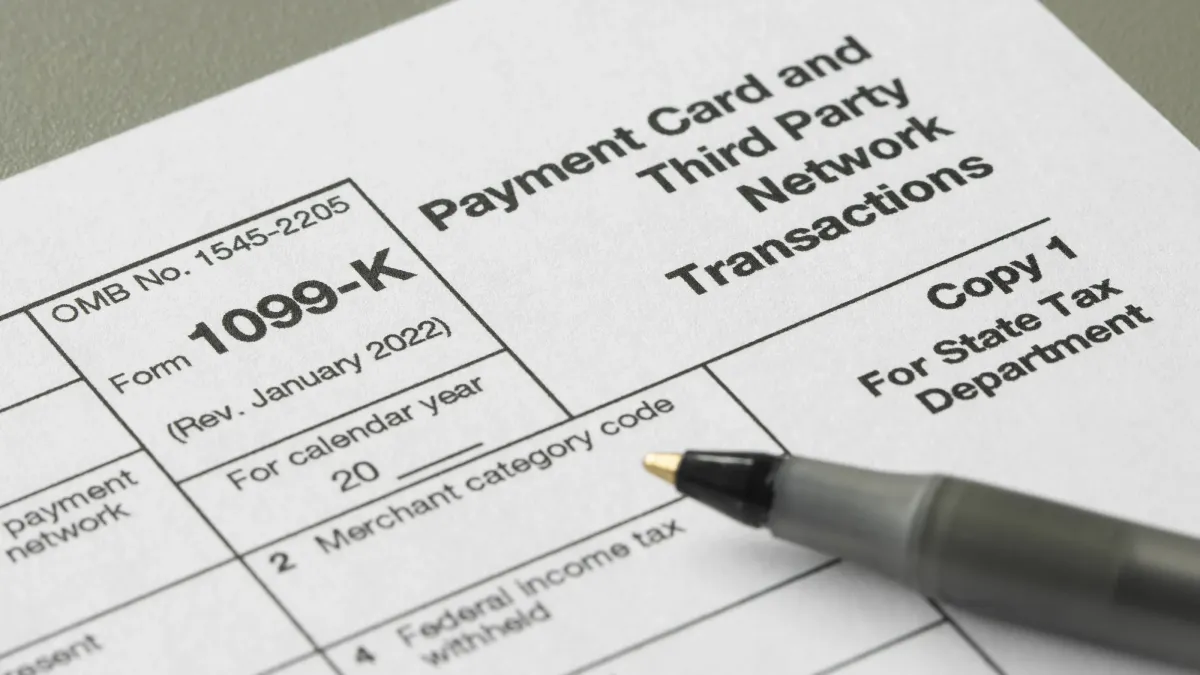
The One Big Beautiful Bill Act (OBBBA), enacted on July 4, 2025, restores the federal Form 1099-K de minimis standard to $20,000 in gross payments and 200 transactions for third-party settlement organizations (TPSOs) such as PayPal, Venmo, Etsy, and similar platforms. This reverses the phased plan that pointed to $2,500 for 2025 and $600 from 2026, returning to the legacy threshold for the 2025 tax year onward (unless Congress changes it again). Income remains taxable even if a taxpayer doesn’t receive a 1099-K—this change affects information reporting, not taxability.
What changed—and when
Before OBBBA, IRS guidance called for a transitional $2,500 threshold for 2025 and $600 thereafter. OBBBA overrides that plan and reinstates $20,000/200 at the federal level beginning with tax year 2025.
Quick note on other forms: OBBBA also raises some 1099-MISC/NEC thresholds to $2,000 starting tax year 2026 (indexed thereafter)—review your templates early.

Who’s affected
Third-party platforms (TPSOs). Expect a return to the legacy de minimis exception and lower 1099-K volume than under the $2,500/$600 path.
Gig sellers & casual resellers. Fewer 1099-Ks than under the phased plan—but all income remains reportable whether or not a form is issued.
Firms (CPAs, EAs, preparers). Update intake scripts, organizer questions, and client education to prevent “no 1099-K = no income” misconceptions.
What to update in your stack (immediately)
Rules & flags. Reset any 1099-K auto-flags from $2,500/$600 back to $20,000/200. Keep “income still taxable” prompts in place.
Document intake. Tag TPSO statements (PayPal/Venmo/Stripe/etc.). Ask clients to upload platform summaries even if they don’t expect a form.
Client comms. Publish a short explainer clarifying OBBBA affects reporting only; taxability is unchanged.
Other 1099 changes. If you issue MISC/NEC, plan template updates for the $2,000 threshold effective 2026.

AI plays that pay off (Tax Tech in practice)
1) Smart intake & normalization
Auto-detect TPSO documents, extract gross payments and transaction counts, and normalize platform names. Push edge cases (e.g., 180–220 transactions) to a reviewer queue.
2) Exception education, automatically
If a client is under the 1099-K threshold, trigger a one-click message explaining that income is still reportable and what records to keep. This preempts “I didn’t get a form” errors.
3) Variance flags with evidence
Cross-check TPSO totals against GL/bank feeds and flag variances above your tolerance; attach reconciled evidence and a plain-English explanation for reviewer sign-off.
Talking points for clients (use in emails/texts)
What changed: Starting in 2025, TPSOs issue 1099-K only if you exceed $20,000 and 200 transactions.
What didn’t change: You must still report all income from selling goods/services, even without a form.
What we need from you: Platform summaries, bank exports, and receipts—upload via the client portal.
FAQ
Does OBBBA change how my taxes are calculated?
No. It changes reporting thresholds, not the taxability of income.
Will states follow the same rules?
State reporting can differ. Confirm state-level guidance each season and document exceptions in your workpapers.
What if we already planned for $2,500/$600 in 2025/2026?
Update your rules, organizers, and templates to $20,000/200 for 2025; note the MISC/NEC changes ahead for 2026.
Bottom line
OBBBA’s 1099-K reset removes noise from information reporting but doesn’t remove anyone’s duty to report income. Update thresholds, reinforce education, and let AI handle identification, extraction, and exception routing so your team can focus on advisory.